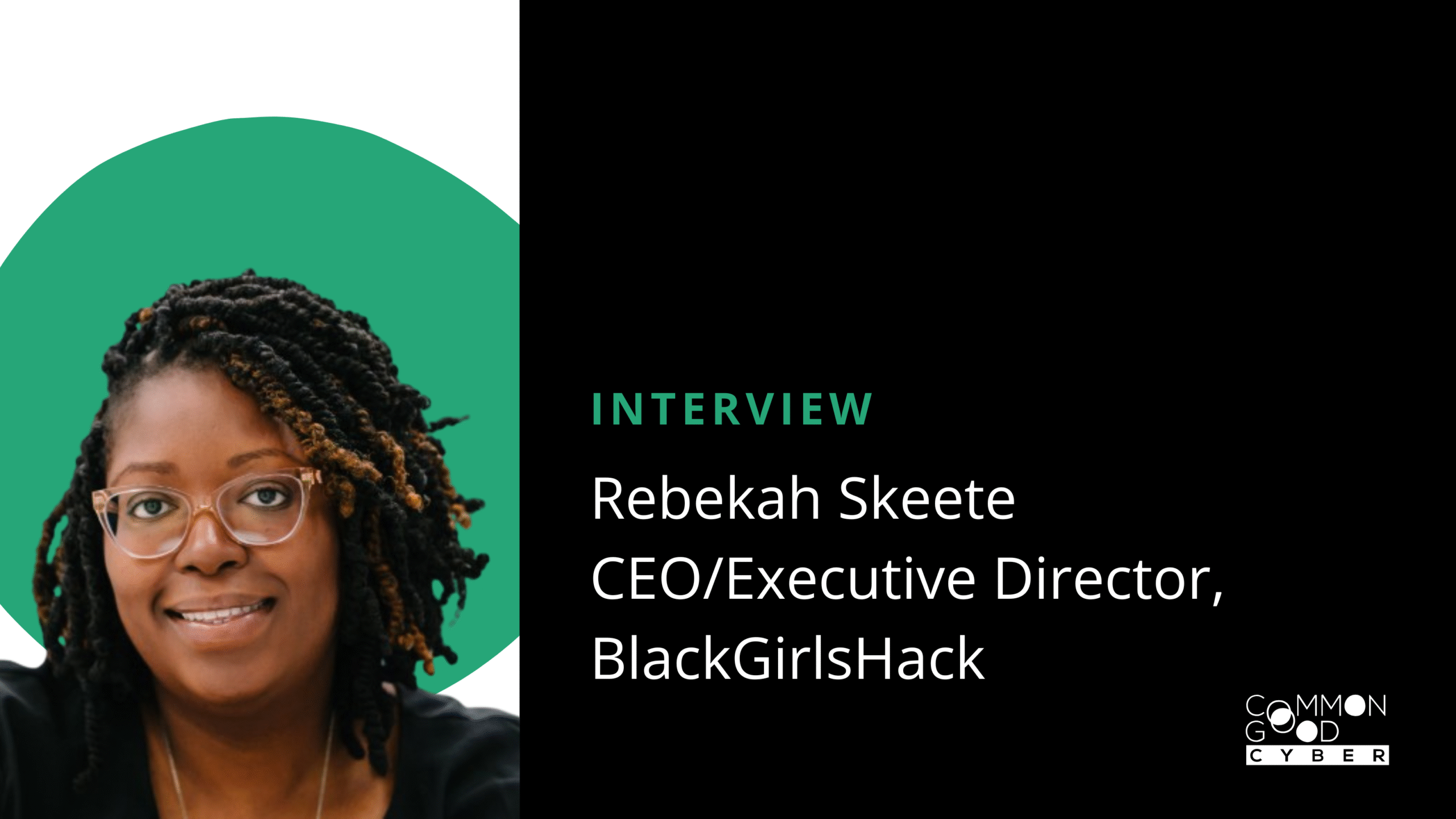
We interviewed Rebekah Skeete, CEO/Executive Director of BlackGirlsHack, about centering diversity, equity, and inclusion in cybersecurity careers, its programs in cloud security, ethical hacking, and digital forensics, and how they’re tackling funding challenges in today’s tough landscape.
Please introduce BlackGirlsHack and explain how your work is helping to build a more diverse, equitable, and inclusive cybersecurity workforce.
At BlackGirlsHack, we help underrepresented professionals, especially Black women and girls, gain the hands-on skills, mentorship, and certifications they need to start and grow their cyber careers.
Through our programs in cloud security, ethical hacking, and digital forensics, we bridge the gap between classroom learning and real-world experience. At the heart of what we do is empowerment. We’re not just helping people get jobs, we’re helping them build confidence, find community, and take their place in an industry that needs their talent and perspective.
BlackGirlsHack offers hands-on training, mentorship, and community to support Black women and girls entering cybersecurity. What strategies have been most effective?
From our member feedback, several recurring threads make clear which strategies are resonating and delivering impact:
Cohort-based Models and Community Vibe
Our cohort structure is one of the most powerful tools we use. Participants often say that studying or training alone can feel overwhelming. In a cohort, they show up not just for themselves but for each other, which boosts consistency and follow-through. It creates accountability, and the shared progress motivates people to finish.
These groups also enable peer-to-peer learning. Someone who just passed Security+ can immediately turn around and help the next person prepare, which reinforces their own knowledge while lifting up others. This “each one teach one” model is mentioned often in feedback about how BGH makes learning less intimidating and more collaborative.
The community vibe is equally important. Many Black women and girls in cyber report being “the only one in the room” in school or at work. Cohorts counter that isolation by surrounding them with people who look like them, share their goals, and celebrate their progress. The energy at events like SquadCon reflects that. Participants describe finally feeling like they belong in cybersecurity.
In these spaces, people also gain the freedom to fail and try again without judgment, which builds confidence. Successes are celebrated publicly, whether it’s passing an exam or landing a first role, and that encouragement drives others forward. Alumni often return as mentors, completing a full circle of giving back.
Sharing Early Wins and Visible Achievements
In our ‘We Got Next’ program for high school students, the first two members took and passed their Security+ exams. Achievements like this build confidence for participants and also show partners and supporters that this model works.
What impact have you seen from your work so far, and can you share a success story where BlackGirlsHack changed someone’s career path or helped them enter the cybersecurity field?
The impact of BlackGirlsHack is clearly reflected in the data from our 2025 Cyber Talent Study, which surveyed over 440 professionals. Across nearly every domain including technical, leadership, and professional, BGH members reported higher confidence and job readiness than non-members. This means our members are not just learning; they are applying those skills and advancing their careers.
For example, members who participated in our Cloud Security, Digital Forensics (DFIR), and Certified Ethical Hacking Accelerator programs showed 30 to 33 percent higher confidence in advanced technical areas like cryptography, network management, and enterprise architecture compared to peers without that training. These programs directly translate into certifications, new job opportunities, and leadership readiness.
We have seen many members transition from unrelated careers into cybersecurity through these pathways, with some securing their first SOC analyst or GRC roles, and others moving into technical leadership or CISO-track positions. Beyond skills, participants consistently credit BGH’s mentorship, community, and representation as the turning points that gave them the confidence to pursue and persist in the field.
What are the most significant funding or sustainability challenges you face as a nonprofit? How are you navigating those challenges to keep growing your impact?
Like many mission-driven nonprofits, BGH faces the challenge of balancing growth and sustainability while maintaining affordable and accessible programming. Our members often need low-cost or sponsored access to training, certification preparation, and cyber labs. At the same time, scaling those programs, particularly in high-demand areas like DevSecOps, AI security, and cloud training, requires continuous investment in platforms, instructors, and infrastructure.
To navigate this, we are:
- Building partnerships with employers, academic institutions, and sponsors who share our workforce equity mission.
- Using data from the Cyber Talent Study to show measurable impact that helps secure grants and corporate funding tied to workforce outcomes.
- Developing sustainable pathways through collaborations that connect BGH graduates to jobs, apprenticeships, and long-term employer partnerships.
The report highlights that BGH’s model works. Our programs build confidence, close technical gaps, and advance real careers. Our next step is ensuring stable funding to meet the growing demand from thousands of aspiring professionals.
If your programs were interrupted due to a lack of funding, what would be lost in terms of talent development and progress toward a more inclusive cybersecurity workforce?
A disruption in BGH programming would mean far more than paused classes. It would represent a setback for equity in the cybersecurity workforce.
The Cyber Talent Study shows that BGH members outperform non-members in nearly every measured competency, especially in areas employers value most such as cloud security, risk management, communication, and emotional intelligence. If these programs were halted, the field would lose a proven pipeline of skilled, job-ready, and diverse professionals that the industry needs to close its workforce gap.
Beyond technical readiness, BGH provides mentorship, representation, and confidence-building that traditional programs often overlook. Losing that support would mean losing:
- The momentum of hundreds of women of color entering or advancing in cybersecurity each year.
- The inclusive community that sustains retention and leadership growth.
- The data-driven model that is helping reshape how the industry measures readiness and potential.
In short, without BGH, the cybersecurity ecosystem would lose one of its most effective engines for diverse talent development, confidence-building, and long-term inclusion.